
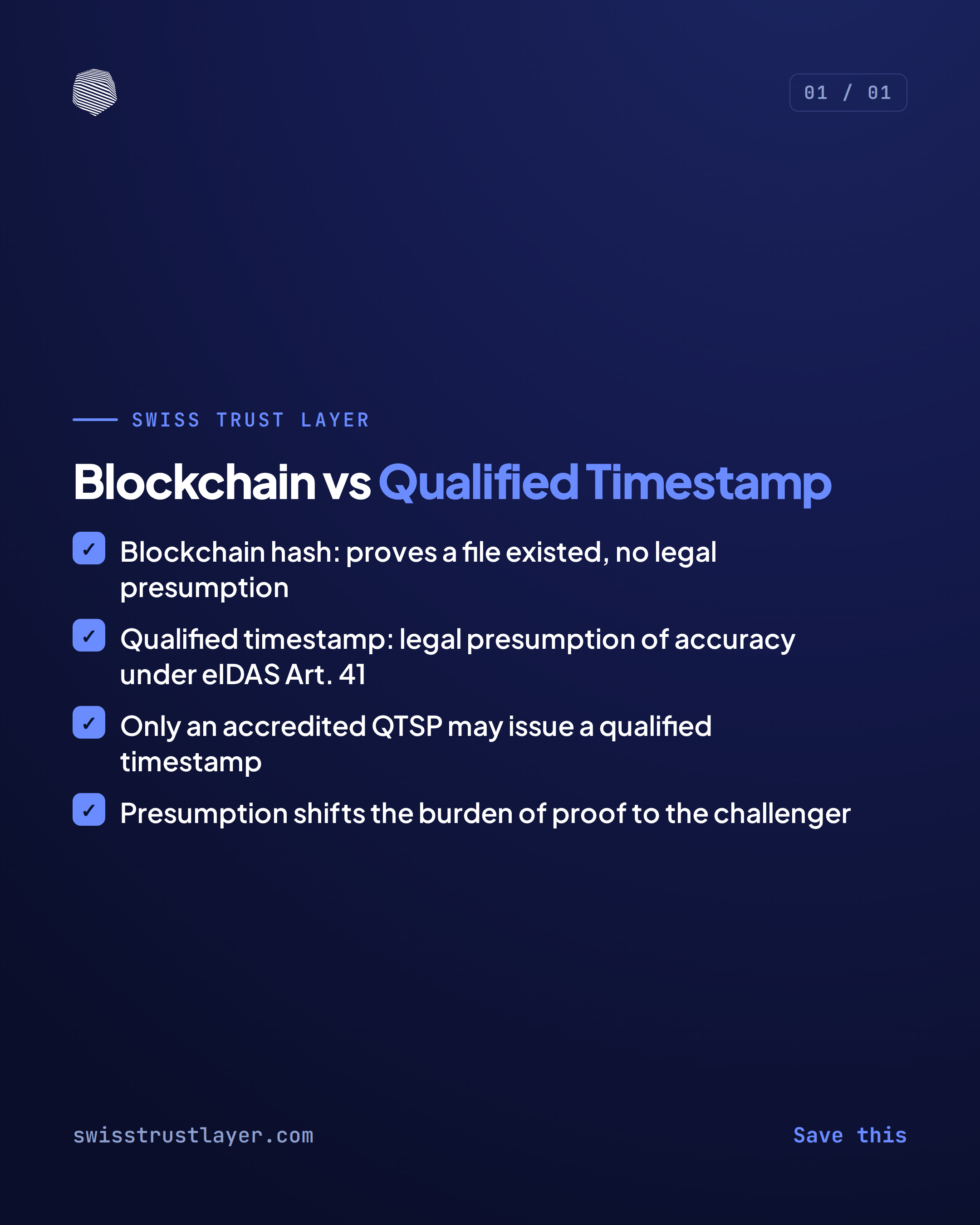
La blockchain prova che un file è esistito. Non prova che un tribunale lo accetterà.
Legal

La blockchain prova che un file è esistito. Non prova che un tribunale lo accetterà.

Un timestamp blockchain registra che un file è esistito in un dato momento. Non porta presunzione legale sotto eIDAS o ZertES. Un timestamp qualificato di un QTSP accreditato, sì.

S
Swiss Trust Layer· Legal Technology
·July 15, 2026· 6 min lettura
La blockchain prova che un file è esistito. Non prova che un tribunale lo accetterà. — Swiss Trust Layer

I timestamp blockchain sono popolari per la documentazione IP. La realtà giuridica è tuttavia più limitata.

Il divario di presunzione legale

Ai sensi dell'art. 41 eIDAS, un timestamp elettronico qualificato di un QTSP accreditato gode di presunzione legale di accuratezza. I tribunali di tutti i 27 stati membri UE devono trattarlo come affidabile. Nessuna presunzione equivalente esiste per i timestamp blockchain. Secondo l'art. 11 ZertES, un timestamp qualificato stabilisce quando un documento è stato firmato. Un timestamp blockchain non soddisfa questo requisito.

In pratica

I timestamp blockchain sono un complemento ragionevole ma non sostituiscono i timestamp qualificati. Per IP protetta legalmente, lo strumento è un timestamp qualificato di un fornitore sul registro BAKOM o la lista di fiducia UE. Vedi la guida eIDAS.


Proteggi il tuo lavoro con Swiss Trust Layer AG

Sigilla la tua proprietà intellettuale con un e-Sigillo provato in tribunale, supportato da Swisscom Trust Services.

Prenota una Demo Gratuita

Related Articles

The qualified signature workflow, start to finish
Legal

The qualified signature workflow, start to finish

A qualified electronic signature involves identity verification, signing ceremony, PAdES application, RFC 3161 timestamping, and public verification. Each step serves a specific legal purpose. This is what the process looks like from upload to verified certificate.

July 19, 2026Read more →
5 documents Swiss businesses should never sign with a basic e-signature
Legal

5 documents Swiss businesses should never sign with a basic e-signature

Swiss law specifies document types where only a qualified electronic signature carries the legal weight of a handwritten signature. Using a simple or advanced e-signature on these documents creates an enforceable gap that surfaces in disputes. Here are the five categories that matter.

July 18, 2026Read more →
DocuSign vs SealMyIdea: where a visual signature isn't enough
Legal

DocuSign vs SealMyIdea: where a visual signature isn't enough

DocuSign provides advanced and simple electronic signatures. For real estate, IP transfers, fiduciary mandates, and employment contracts in Switzerland, only a qualified electronic signature under ZertES Art. 11 carries legal presumption. This is the gap DocuSign cannot close.

July 17, 2026Read more →
For agencies: prove you authored the work and get clean client sign-off
Legal

For agencies: prove you authored the work and get clean client sign-off

Creative and digital agencies lose IP disputes because they cannot prove creation date or obtain legally binding client acceptance. A qualified electronic signature for client sign-off, combined with timestamped delivery, creates the complete audit trail that courts recognise.

July 16, 2026Read more →
What actually happens when a signed contract is challenged
Legal

What actually happens when a signed contract is challenged

When a signed contract is disputed, the outcome depends on the signature tier used. Learn how ZertES Art. 11 and eIDAS Art. 25(2) shift the burden of proof when it matters most.

July 14, 2026Read more →