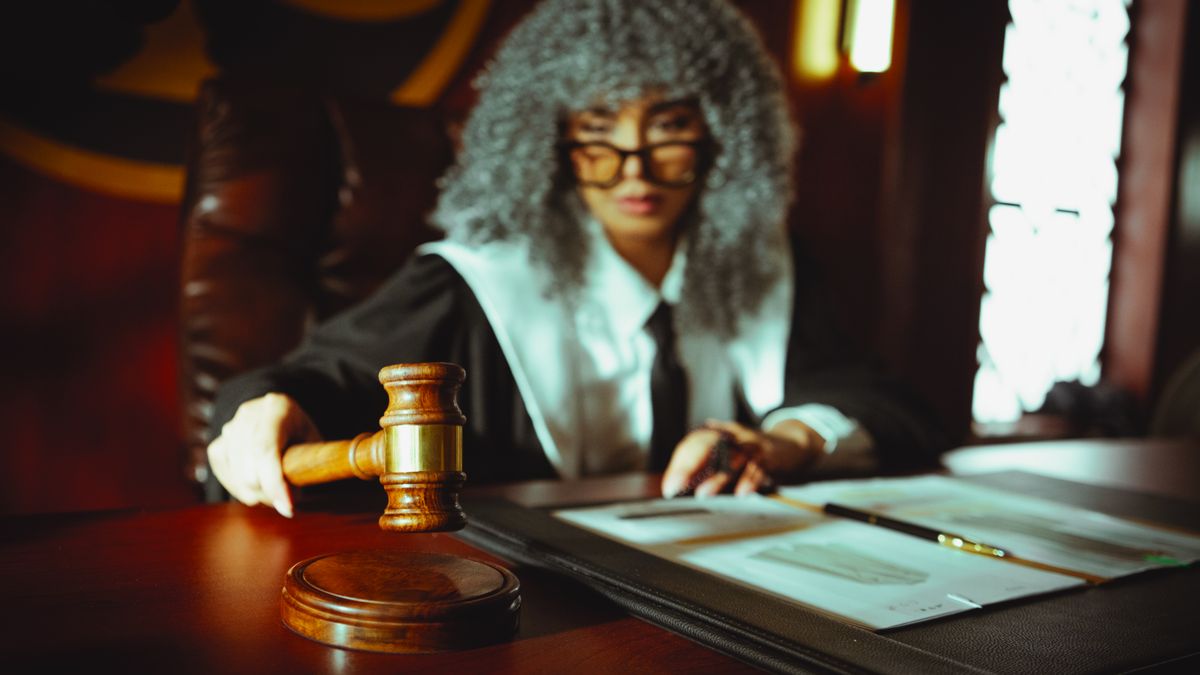
A jury in the Northern District of California will hear Andersen et al. v. Stability AI Ltd. et al. (N.D. Cal., No. 3:23-cv-00201), a landmark US copyright case over how AI image generators were trained. The trial was once on the calendar for September 2026. The schedule moved, and the jury trial is now set for 5 April 2027, with a pretrial conference on 1 March 2027. The plaintiffs, a group of visual artists, allege that their copyrighted works were copied and used to train image-generation models without permission. Stability AI and the other defendants dispute those claims.
No verdict exists yet. This post does not predict one, and nothing below should be read as a forecast of who wins. What the trial does, win or lose for either side, is put a spotlight on a question that photographers, illustrators, and other visual artists already face independent of this specific case: when a dispute over authorship or origin comes up, what do you actually have to show for it?
Why this case matters even before a verdict exists
Trials like this one get covered as a referendum on AI training practices generally. That framing misses the part that applies directly to individual creators. Regardless of how the jury rules on the model-as-copy theory, the underlying evidentiary problem for artists does not go away. A ruling for the plaintiffs would not retroactively hand every photographer a record of when they made their own work. A ruling for the defendants would not remove the exposure that a photographer's images can be scraped, redistributed, or claimed by someone else with no independent way for the photographer to counter it.
The book-author plaintiffs in the parallel wave of AI training litigation ran into the same structural issue visual artists now face: the strength of a claim often comes down to whether the creator can independently establish what they made and when, separate from whatever record a platform or an AI company happens to keep. Platforms change terms of service. Companies get acquired or shut down. An artist's proof of authorship should not depend on any of those things staying stable.
What the trial is actually deciding, and what it is not
The trial is deciding whether, as a matter of copyright law, a trained model can itself constitute an infringing copy of the training images under the facts presented in this specific case. That is a narrow legal question with broad industry implications, and it will take a jury weighing evidence to answer it.
The trial is not deciding whether any individual photographer or illustrator, outside this case, can prove they made a specific image on a specific date. That is a separate, older, and in some ways simpler problem: evidence of authorship and timing. It predates generative AI by centuries and it is not going to be resolved by this jury.
Where the two problems intersect
- If a visual artist's work turns up in a dispute, whether that dispute is about AI training, plagiarism, or a client claiming the work as their own, the artist needs the same kind of independent proof no matter which of those scenarios applies.
- A platform's own upload timestamp, EXIF metadata, or cloud storage log is useful but was never designed to serve as forensic proof. It can be altered, disputed, or simply unavailable if the platform is a party to the dispute.
- Under the Berne Convention, copyright protection is automatic on creation and does not require registration to exist. But automatic protection is not the same as an easy-to-produce record. When a dispute actually happens, the artist who can produce independent, dated proof of a work's existence starts from a materially stronger position than one who cannot.
The proof habit that matters no matter the verdict
The practical takeaway for photographers, illustrators, and other visual artists is not to wait for this trial, or the next one, to resolve the AI training question before taking their own exposure seriously. The habit worth building now is straightforward: create an independent, time-stamped record of a work at the moment it is finished or first published, held somewhere outside the platform where the work will eventually be posted, sold, or licensed.
This is the same underlying gap Swiss Trust Layer's cryptographic sealing is built around: a way to establish, independent of any single platform or company's internal records, that a specific file existed in a specific form at a specific point in time. That kind of dated, portable proof does not depend on a jury's decision in any one case, and it does not depend on the AI company or platform involved in a future dispute continuing to exist or cooperate.
A short checklist for visual creators watching this trial
| Situation | What to have ready |
|---|---|
| Publishing new work to a portfolio site or marketplace | An independent, dated record of the file created before or at the moment of publishing, not reliant on the platform's own timestamp |
| Licensing work to a client or agency | Proof of the work's existence prior to the licensing conversation, so authorship is never in question |
| Suspecting unauthorized use or scraping of your work | A dated record predating the suspected use, held somewhere the accused party cannot access or alter |
| Following AI training litigation generally | Treat the case outcome as informative for industry practice, not as a substitute for your own proof |
What to watch for as the case moves forward
As Andersen v. Stability AI moves toward trial, expect coverage to focus heavily on the training question itself and on what a verdict either way would mean for AI companies. That coverage is worth following, and the date may move again. Just do not let it stand in for the separate, more immediate step of keeping your own evidence of authorship, which is useful regardless of the jury's decision and regardless of what happens in the next case after this one.