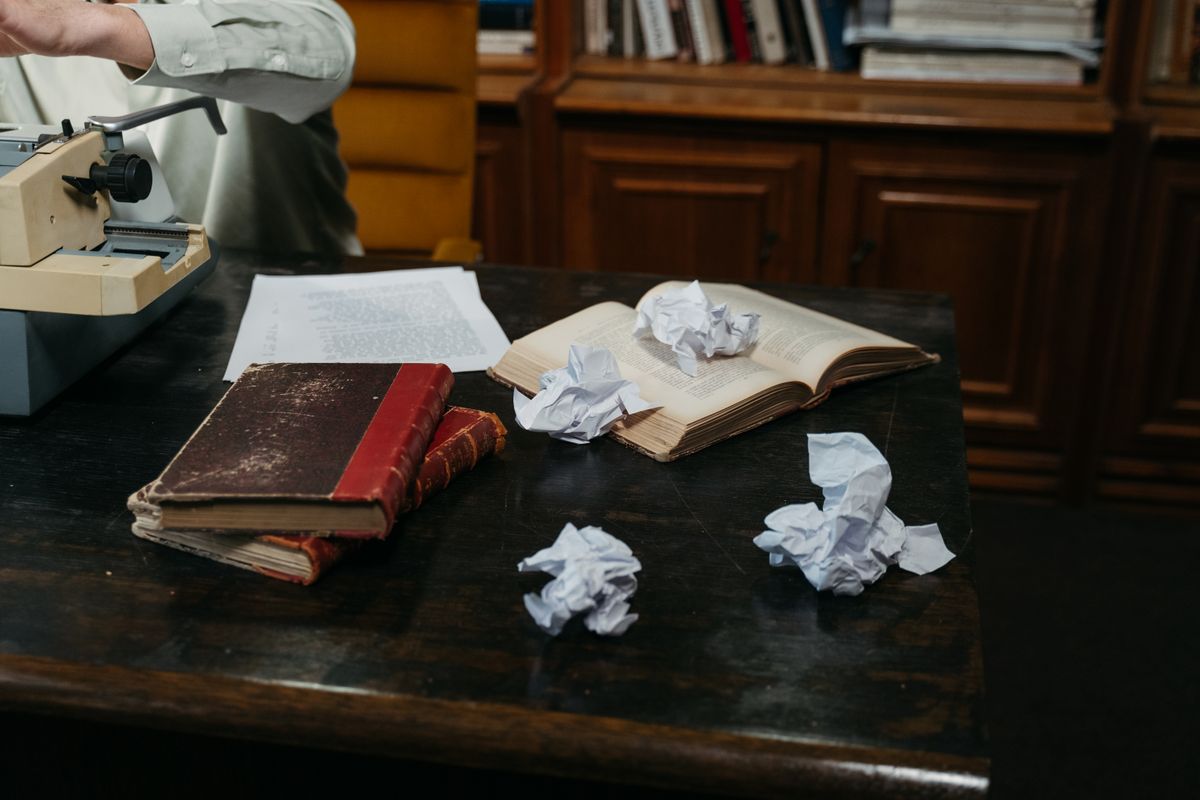
A small-press editor has three weeks of work in one Word file: an author's manuscript, plus the editor's cuts and the author's replies. This week the file goes out by email to a foreign-rights agent and a possible co-edition partner, ahead of the Frankfurt Book Fair, which the organiser lists for 7 to 11 October 2026. Six weeks later a near-identical text appears under another name. The editor's first thought is simple: prove it was ours, and prove when.
The short answer to manuscript copyright proof before submission: copyright already exists, so what you need is a dated, checkable record of the exact file, made before it leaves your desk. Seal the version you send, keep the original, and note who did what. That record will not settle authorship by itself, but it fixes what existed and when, and that is where most disputes start.
What you already own, and what you cannot show
Under the Berne Convention, the enjoyment and exercise of an author's rights is not subject to any formality (Article 5(2)). WIPO lists more than 180 member countries, so the right arises without a filing in most places a manuscript will travel. What the convention does not create is a record. When a text is copied, a court asks which file, from when, from whom. A Word document's own date fields are written by whichever computer saved it, and anyone can change them.
Seal the file as it leaves your desk
On the platform you upload the file and receive a sealed PDF. The certificate carries a trusted timestamp under RFC 3161, a cryptographic fingerprint of the document and a public verification link that works without an account. Under Article 41(2) of the eIDAS Regulation, a qualified electronic time stamp enjoys the presumption of the accuracy of the date and time it indicates and of the integrity of the data to which they are bound.
In our editor's case that means: seal the manuscript as the author approved it, then seal again when the agent copy is final. Each version gets its own date. If the other text matches the first version and not a later one, the order in which things existed is on record.
Add a person to the record
A timestamp shows a file existed. It does not show who made it. The register adds an identity check as a separate step: you scan a QR code and verify with your passport in an app, and the record is tied to that verified person. For a press this is worth doing for the person who signs off the text. The launch post on the register walks through the whole set of steps.
Say how the text was made
Once a file is in the register, it can carry one content label. The six are HUMAN AUTHORED, HUMAN APPROVED, AI ASSISTED, AI MODIFIED, AI GENERATED and AI FREE. Under the Content Label Terms v1.2, only one AI label applies per content and version. HUMAN AUTHORED is the identity-bound designation for AI FREE only and cannot be combined with AI ASSISTED, AI MODIFIED or AI GENERATED. HUMAN APPROVED can sit alongside any AI label, and where HUMAN AUTHORED is used, the approval must come from a different natural person. For a publisher that gives a plain division of labour: the author declares, the editor approves. Once chosen, a label is locked, and the resealed certificate shows it.
Let the file identify itself
Each file in the register also shows an ISCC code, with an ISCC-ID, a datahash and a metahash. It is a code derived from the content, which means the work can be recognised without the original file being shown to anyone. That is useful when a text circulates among agents and translators as several slightly different files.
What none of this will tell a court
- A seal does not prove who wrote the text, and it does not prove the file was unedited before it was sealed. It shows what existed at that moment.
- The seal covers a fingerprint, not a stored copy you can rebuild the manuscript from. Keep the exact original file in more than one place.
- A label records a declaration. It is not an audit of how the text was written.
- How any court weighs any piece of evidence is up to that court.
A short order of work before you hit send
Freeze the version. Seal it. Complete the identity check for the person who stands behind it. Choose the label that matches how the text was made. Only then email the file. Anyone you send it to can paste your public verification link into the validator and see the date for themselves, with no login.
Back at the editor's desk
If the editor had sealed the author-approved file before sending, the late look-alike would meet a dated record of the exact text, a verified person behind it and a label stating how it was made. The editor would not have to argue from memory about who sent what first. The record would not end the argument alone, but it would put the editor in a position to start it with evidence.
Seal your manuscript before the next submission, and read how the process works end to end on how it works.