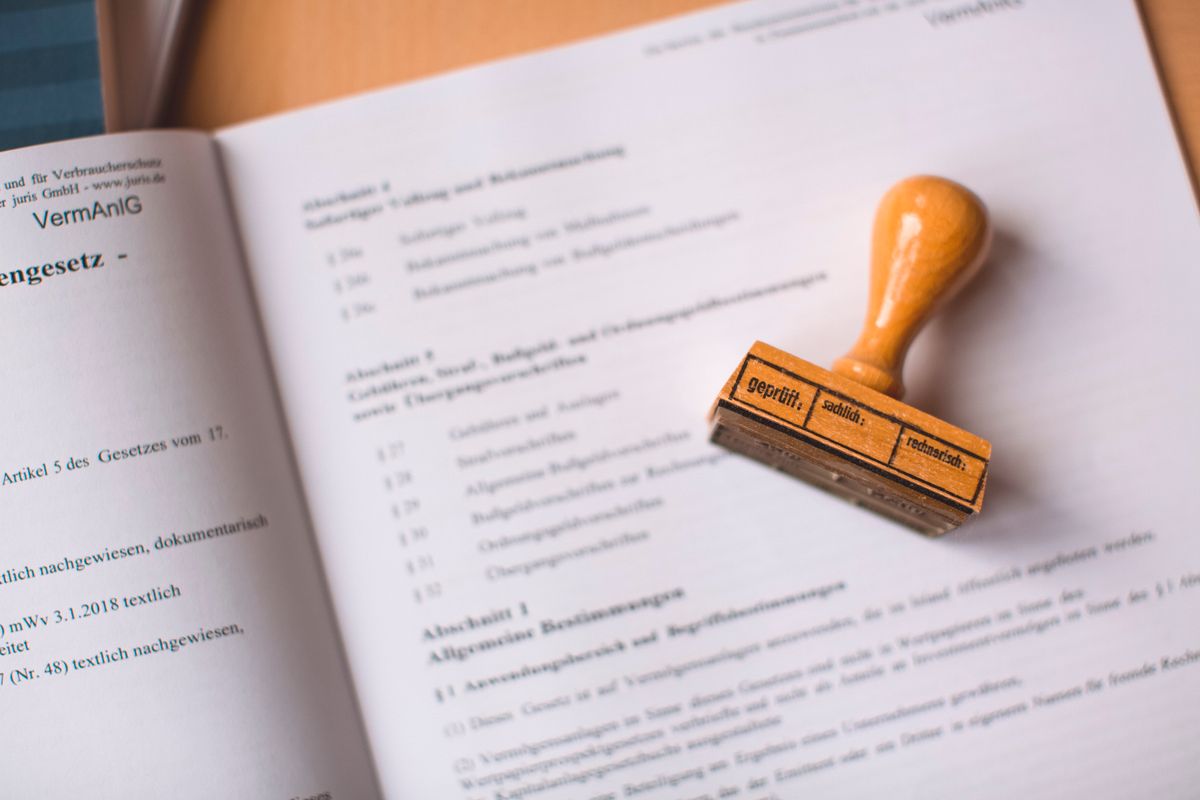
People ask us fairly often whether sealing a file online is basically the same as notarising it. It is not, and the differences matter enough that mixing them up can leave you exposed in exactly the situation you were trying to avoid. A notary and a Swiss qualified electronic seal are built to prove different things, to different audiences, under different legal rules. Knowing where each one actually applies saves you from reaching for the wrong tool, or worse, assuming you are covered when you are not.
What a notary is actually verifying
A notary's core function, across most jurisdictions that use the role, is to confirm identity and witness an act. You appear in person, or in some jurisdictions through a supervised video call, present identification, and the notary confirms that the person signing is who they claim to be. For certain categories of legal act, such as wills, powers of attorney, or transfers of real property, a notary may also record that the signer appeared to understand the document and that the signing took place in their presence.
That authority comes from a specific jurisdiction and is, in most cases, territorial. A notarisation performed in one country does not automatically carry the same weight in another; cross-border recognition typically needs an extra step, such as an apostille or consular legalisation, depending on the countries involved. None of that makes notarisation weaker as a tool. It makes it a different kind of proof: proof about a person and an act, anchored to one place and one appointment.
What a Swiss qualified seal is actually verifying
A Swiss qualified electronic seal does not verify who you are as a matter of legal identity, and it does not witness intent the way a notary does. What it proves is narrower, and for a specific category of dispute, more useful: that a specific file, byte for byte, existed at a specific point in time.
The process runs through a Qualified Trust Service Provider, Swisscom Trust Services in our case, accredited under the Swiss Federal Act on Certification Services in the Field of Electronic Signatures (ZertES). A cryptographic hash is generated from the file itself, and the Qualified Trust Service Provider issues a qualified electronic timestamp over that hash. Under eIDAS Article 41, a qualified electronic timestamp carries a legal presumption as to the accuracy of the date and time it indicates and the integrity of the data it is bound to. That presumption shifts the burden of proof. Instead of you having to prove a date is correct, whoever disputes it has to prove it is wrong.
Where a qualified electronic signature is applied rather than just a timestamp, its equivalence to a handwritten signature under Swiss law comes from Article 14 paragraph 2bis of the Swiss Code of Obligations, not from ZertES itself. ZertES sets the accreditation regime for the providers issuing the signature; the Code of Obligations is what gives the resulting signature the same legal standing as a handwritten one for the contract types where that distinction matters.
Where a notary still does something a seal cannot
It is worth being honest about this part, because overselling it helps nobody. There are legal acts in many jurisdictions that require in-person or supervised-video notarisation by law, regardless of what cryptographic proof exists around them: certain real estate transfers, wills, marriage contracts, and the formation documents for some types of company. A qualified seal does not substitute for those requirements, and any vendor implying otherwise should not be trusted on that point.
A notary also does something a seal structurally cannot: confirm, at the moment of signing, that a specific human being with verified identity was present and appeared to understand the act taking place. A seal proves a file's content and a point in time. On its own, it does not prove who clicked the button, and it does not assess capacity or consent. If a dispute is going to turn on whether it was really that person signing, and whether they understood what they were agreeing to, a notary's in-person witnessing does something a timestamp cannot replicate.
Where a qualified seal does something notarisation cannot
Flip the scenario around and the picture changes. Most disputes over creative and business work are not about whether a specific human signed a specific contract. They are about which version of a document, design, script, or dataset existed first, and whether it has been altered since. A notary is not built to answer that question at all. Notarising a printout only confirms that a printout existed on the day you brought it in. It does not confirm that the underlying digital file matches it, and it does not rule out an earlier draft sitting somewhere else.
A qualified seal answers exactly that question, and does it without the constraints notarisation carries. There is no local jurisdiction to travel to and no appointment to book. The seal is issued in minutes, and the certificate it produces can be checked by anyone, anywhere, on a public verification page, without an account and without contacting you. A counterparty in a different country can check the record themselves in the time it takes to open a link. That is a genuinely different shape of proof from a stamped and signed paper sitting in a filing cabinet in one city.
The underlying Berne Convention already establishes that copyright protection is automatic on creation and requires no registration to exist. What a qualified seal adds is not the right itself, but evidence you can produce on demand about when a specific version of a work existed, evidence that a notary sitting in one jurisdiction was never built to provide across borders.
A common mix-up: remote online notarisation is not the same thing either
Some notary services now operate over video, letting a licensed notary witness a signing remotely instead of in a physical office. That is a real and useful development, and it removes the travel problem for the notary step specifically. But it is still notarisation: a licensed individual confirming identity and witnessing an act, governed by that jurisdiction's rules for who may notarise and what counts as valid witnessing. It answers the identity-and-witnessing question faster. It does not answer the different question a qualified seal answers, which is what a file contained and when, verifiable independently of any single person's testimony.
The two are not competing for the same job
The honest way to think about this is not which one is better, but which question is being asked. If the question is legal identity and witnessed consent for an act that a jurisdiction requires to be notarised, use a notary. There is no digital substitute for that requirement, and pretending otherwise creates real legal risk. If the question is proving that a specific file existed, unaltered, at a specific time, so that a dispute months or years later can be resolved without relying on anyone's memory or goodwill, a qualified electronic seal does that faster, at lower overhead, and with verification that works across borders in a way a single-jurisdiction notarisation does not.
Plenty of real workflows use both, at different points. A company formation document might need a notary because the law in that jurisdiction says so. The design files, contracts, and drafts that led up to it can be sealed along the way, so that if a dispute ever comes up about who created what and when, there is a verifiable record rather than a set of dated folders on someone's laptop. A freelancer sending a first draft to a client, an agency archiving a deliverable at handoff, a founder documenting when a specific version of a pitch deck or product spec existed: none of those situations call for a notary appointment, and all of them benefit from a timestamped record a counterparty can check without asking anyone's permission.
Where to check the legal basis yourself
We would rather you read the primary sources than take our summary at face value. Swisscom Trust Services' accreditation sits under ZertES. The presumption attached to a qualified timestamp is set out in eIDAS Article 41. The handwritten-equivalence of a qualified electronic signature under Swiss contract law comes from OR Article 14 paragraph 2bis. If you want the full breakdown of how Swiss law treats each tier of electronic signature, qualified, advanced, and simple, our ZertES page covers it in detail. To see what a completed record looks like from the outside, you can also verify a sealed document directly.